

Winter Travel Can Add Another Layer of Risk
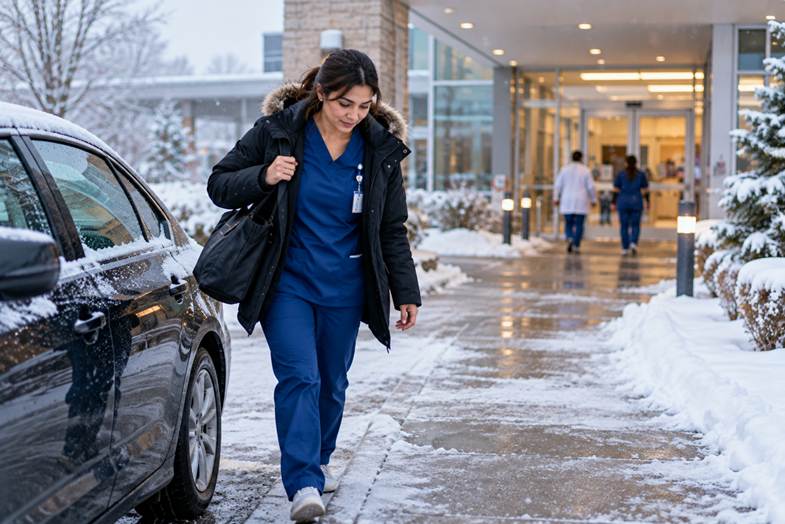
Healthcare workers do not always have the option of staying home when winter weather arrives. Nurses, CNAs, LPNs, therapists, technicians, and other healthcare professionals may need to commute for early-morning, overnight, weekend, or holiday shifts.
Snow, ice, reduced visibility, extreme cold, and changing road conditions can turn an ordinary commute into a safety concern. Preparing before you leave can reduce avoidable risks and help you make safer decisions when conditions change.
OSHA identifies winter driving, slips on snow and ice, cold stress, and being stranded in a vehicle among the hazards workers may encounter during winter weather. citeturn0search5turn0search6
1. Check the Weather Before You Leave
Do not rely only on the weather you see outside your home. Check the current forecast, road conditions, and any winter-weather alerts for the full route to work.
If a winter storm is expected, allow extra travel time and consider whether conditions are deteriorating. CDC recommends planning ahead for winter storms and monitoring weather information, while OSHA advises workers to recognize winter driving hazards and prepare for conditions such as snow and ice. citeturn0search8turn0search6
If your facility has a severe-weather communication process, know where to find updates and who to contact before starting your trip.
2. Prepare Your Vehicle Before Winter Travel
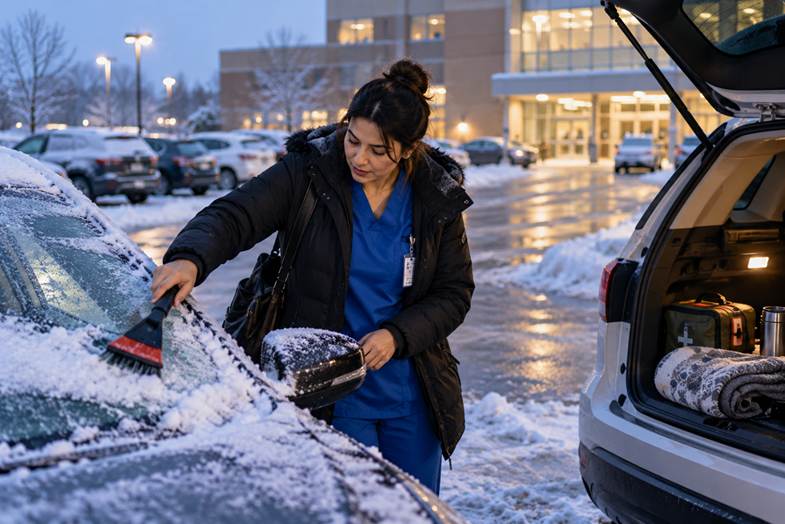
A vehicle that is ready for winter can make a major difference when roads become difficult. Before the season, check tires, battery condition, windshield wipers, lights, fluids, and heating or defrosting systems according to your vehicle manufacturer’s recommendations.
NHTSA recommends carrying supplies such as an ice scraper, snow shovel, jumper cables, flashlight, warning devices, blankets, a first-aid kit, a phone and charger, water, food, and necessary medication. Keeping the fuel tank adequately filled can also reduce the risk of running out of fuel during an unexpected delay. citeturn0search9
3. Keep a Winter Emergency Kit in Your Car
Healthcare workers who travel for shifts—especially early in the morning or late at night—may benefit from keeping a dedicated winter kit in the vehicle.
- Warm blanket or extra layers
- Gloves, hat, and other cold-weather clothing
- Ice scraper and snow brush
- Flashlight and spare batteries
- Phone charger or power bank
- First-aid supplies
- Water and shelf-stable snacks
- Basic vehicle emergency supplies
- Necessary personal medication
- A reflective or high-visibility item if appropriate
The exact contents should reflect your climate, route, vehicle, and personal needs. NHTSA’s winter-driving guidance provides a broader vehicle emergency-supply checklist. citeturn0search9
4. Do Not Rush Because You Are Running Late
A delayed commute can be stressful, particularly when you are scheduled for a healthcare shift. But rushing on snow- or ice-covered roads can create additional risk.
If conditions are hazardous, slow down and leave additional following distance. OSHA recommends that workers recognize winter driving hazards and receive appropriate preparation for winter conditions. citeturn0search6
If you believe you cannot safely reach the facility, follow the facility’s call-in procedure rather than taking unnecessary risks on the road.
5. Be Careful Around Parking Lots and Walkways
Your winter commute does not end when you park. Healthcare workers may still need to walk across parking lots, sidewalks, ramps, or outdoor pathways that have snow, ice, slush, or standing water.
CDC advises avoiding walking on ice during winter storms and recommends limiting outdoor exposure when conditions are dangerous. citeturn0search0
- Use designated walkways whenever possible.
- Take shorter, deliberate steps on slippery surfaces.
- Use handrails where available.
- Watch for black ice and uneven surfaces.
- Wear footwear appropriate for winter conditions.
- Do not carry so much that you cannot maintain your balance.
6. Dress for the Conditions, Not Just the Workplace
You may wear scrubs or a uniform once you arrive, but your outer clothing should be appropriate for the conditions outside. CDC recommends warm, dry clothing, including layers, a water-resistant coat, gloves or mittens, a hat, and water-resistant boots when going outside in very cold weather. citeturn0search1turn0search3
Avoid becoming wet or staying outside longer than necessary. Wetness and exhaustion can increase the risk of cold stress, according to OSHA. citeturn0search5
7. Know the Warning Signs of Cold Stress
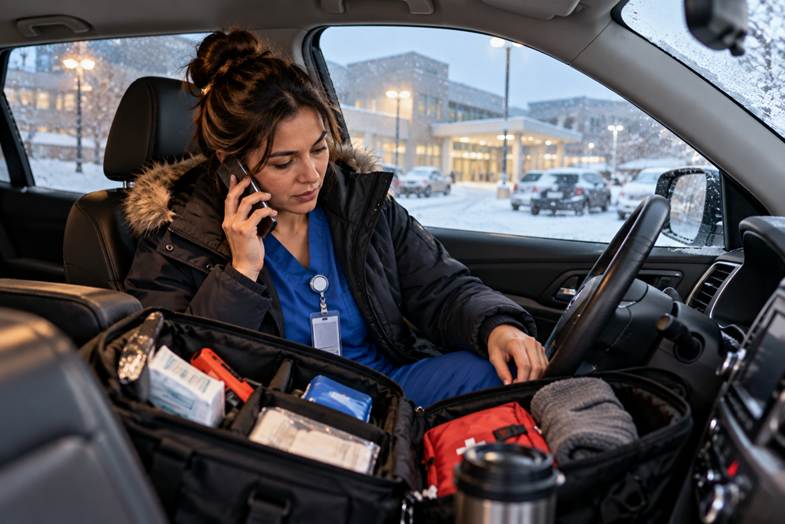
Healthcare workers may notice cold-related symptoms in themselves or someone else while traveling, waiting outside, clearing a vehicle, or responding to a winter-related situation.
CDC lists shivering, exhaustion, confusion, fumbling hands, memory loss, slurred speech, and drowsiness among warning signs of hypothermia in adults. Hypothermia is a medical emergency. citeturn0search0turn0search1
Frostbite can cause numbness and skin that becomes white or grayish-yellow, firm, or waxy. If frostbite is suspected, seek medical care and protect the affected area from further cold exposure. citeturn0search3
If you or someone else has signs of a serious cold-related condition, seek emergency medical help rather than trying to continue normal travel or work.
8. Have a Communication Plan
Before winter conditions become severe, know who you should contact if you are delayed, unable to travel, or concerned about road conditions.
- Save your supervisor or staffing contact in your phone.
- Know the facility’s call-in procedure.
- Communicate delays as early as reasonably possible.
- Do not use your phone while driving.
- If stranded, follow emergency guidance and prioritize your safety.
9. Give Yourself More Time for Early and Overnight Shifts
Early-morning and overnight healthcare shifts can present additional winter-travel challenges because roads may be less treated, visibility can be lower, and temperatures can be colder.
Build extra time into your routine for clearing snow from your vehicle, checking the route, and driving more cautiously. A few additional minutes of preparation can be preferable to rushing through hazardous conditions.
Winter Travel Safety Checklist
- Check weather and road conditions before leaving.
- Make sure your vehicle is winter-ready.
- Keep an emergency kit in your vehicle.
- Clear snow and ice from your vehicle before driving.
- Slow down and increase following distance on slippery roads.
- Use caution in icy parking lots and walkways.
- Wear warm, dry clothing and appropriate footwear.
- Know the signs of hypothermia and frostbite.
- Save your facility or staffing contact information.
- If conditions become unsafe, prioritize safety and communicate promptly.
What to Do If You Become Stranded
If you become stranded during severe winter weather, remain with your vehicle unless there is a clear, safer reason to seek shelter. Keep your phone available for emergency communication, conserve battery power, and use your vehicle’s emergency supplies.
NHTSA recommends keeping an emergency kit in the vehicle, including blankets, a phone and charger, food, water, and other supplies. CDC also recommends having a winter-storm plan and knowing how to protect yourself during and after a storm. citeturn0search9turn0search8
Follow local emergency instructions and contact emergency services when needed.
How MICIL Health Services Supports Healthcare Professionals
MICIL Health Services works with healthcare professionals across healthcare staffing assignments. Clear communication around schedules, facility expectations, assignment details, and unexpected travel or weather concerns is an important part of supporting professionals throughout an assignment.
If you are working an assignment through MICIL and winter weather affects your ability to report safely, communicate with the appropriate MICIL and facility contact as soon as possible and follow the facility’s emergency and attendance procedures.
Sources & References
CDC — Safety Guidelines: During & After a Winter Storm
https://www.cdc.gov/winter-weather/safety/stay-safe-during-after-a-winter-storm-safety.html
CDC — Preventing Hypothermia
https://www.cdc.gov/winter-weather/prevention/index.html
CDC — Preventing Frostbite
https://www.cdc.gov/winter-weather/prevention/preventing-frostbite.html
CDC — Preparing for a Winter Storm
https://www.cdc.gov/winter-weather/safety/index.html
OSHA — Winter Weather: Hazards/Precautions
https://www.osha.gov/winter-weather/hazards
OSHA — Winter Weather: Cold Stress
https://www.osha.gov/winter-weather/cold-stress
NHTSA — Winter Driving Tips: Prepare Your Vehicle
https://www.nhtsa.gov/winter-driving-tips