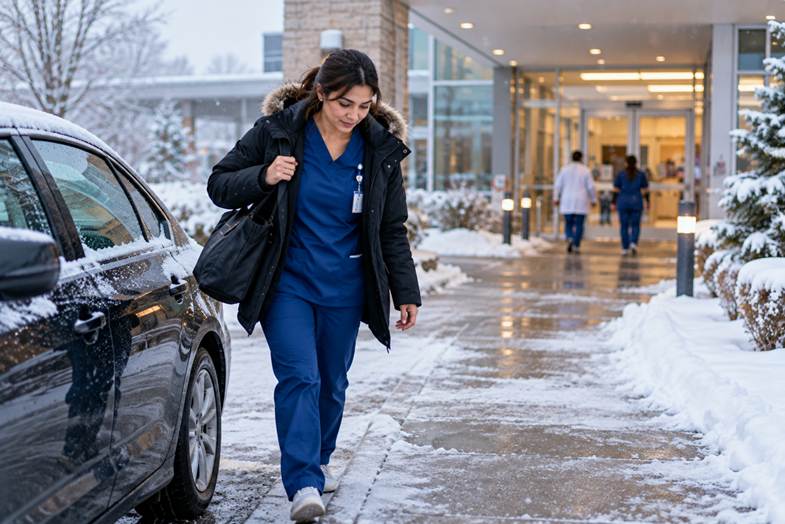


Winter Staffing Can Test Even a Strong Staffing Plan
Winter can create a combination of staffing pressures that are difficult to manage when they arrive at the same time. Respiratory illnesses can increase employee absences, while snow, ice, severe cold, and difficult road conditions can make it harder for staff to reach a facility safely. For hospitals, skilled nursing facilities, nursing homes, clinics, and other healthcare organizations, a winter staffing plan gives leaders a practical way to prepare before a schedule gap becomes an emergency.
The goal is not to predict exactly what will happen. It is to identify the shifts, roles, communication channels, and backup resources that will matter most when winter conditions affect normal operations.
Your Winter Staffing Preparedness Checklist
1. Review Last Winter’s Staffing Patterns
Start with what your facility already knows. Review call-offs, overtime, agency usage, hard-to-fill shifts, weather-related schedule changes, and departments that experienced the greatest pressure last winter.
Look for patterns rather than isolated incidents. Did overnight shifts become difficult to cover? Were weekends a recurring problem? Did a particular unit regularly need additional support? This information can help you focus contingency planning where it is most useful.
2. Identify Your Backup Staffing Resources
Create a simple list of the staffing resources you can contact when your regular schedule is disrupted. Depending on your facility and staffing model, this may include PRN employees, float staff, cross-trained employees, local healthcare professionals, and staffing agency partners.
Keep contact information current and define who is responsible for activating each resource. A backup plan works better when the decision-making process is clear before the first urgent call comes in.
3. Keep Credentialing Information Current
Winter staffing needs can become harder to manage when a candidate is available but cannot be cleared quickly. Review whether licenses, certifications, background checks, health documentation, and facility-specific requirements are current for your existing pool and staffing partners.
A proactive credentialing review can reduce avoidable delays when additional coverage is needed. Facilities should also confirm their own onboarding requirements so staffing requests contain the information needed for efficient candidate review.
4. Strengthen Communication Before Severe Weather
Decide how schedule changes, delayed arrivals, cancellations, and urgent coverage requests will be communicated. Staff should know who to contact if weather affects their ability to report to work, and managers should know who can approve schedule adjustments.
For severe winter weather, communication should be timely and consistent. OSHA recommends that employers plan for winter hazards, train workers, monitor weather conditions, and maintain reliable communication during winter storms.
5. Plan for Weather-Related Travel Disruptions
A staffing plan should account for the possibility that a scheduled employee may be unable to travel safely. Consider which staff live close to the facility, which positions are essential for each shift, and what alternatives are available if roads or transportation become a problem.
For roles that require outdoor travel or exposure to cold conditions, employers should also consider appropriate training, safe work practices, protective clothing, and ways to reduce exposure to winter hazards. citeturn0search2
6. Coordinate Staffing With Infection Prevention
Winter staffing preparedness is not only about snow and transportation. Respiratory viruses can also affect staffing availability and patient-care operations. CDC guidance recommends healthcare facilities use infection-control measures such as appropriate source control, screening and triage, respiratory hygiene, hand hygiene, cleaning, and attention to ventilation when respiratory viruses are circulating. citeturn0search0turn0search1
Make sure your staffing plan and infection-prevention plan work together. If respiratory illness activity increases, leaders may need to review staffing coverage, high-risk units, sick-call procedures, PPE availability, and communication protocols.
A Simple Winter Staffing Readiness Review
- Review last winter’s call-off and overtime patterns.
- Identify the shifts and roles most difficult to cover.
- Confirm PRN, float-pool, and agency contacts.
- Review credentialing and onboarding requirements.
- Confirm the process for weather-related schedule changes.
- Review transportation and severe-weather contingency plans.
- Coordinate staffing plans with infection-prevention leadership.
- Make sure managers know who can activate backup staffing support.
When Should a Facility Consider Additional Staffing Support?
Additional staffing support may be worth considering when a facility has predictable seasonal gaps, recurring difficulty covering specific shifts, increased patient or resident volume, or limited access to internal backup staff. The timing will vary by facility, so the most useful approach is to establish clear triggers before winter pressure peaks.
For example, a facility may decide that repeated open shifts, unexpected clusters of call-offs, or a shortage of qualified staff for essential positions should trigger outreach to an external staffing partner. Having that process defined in advance can make the response more organized.
Winter Preparedness Is About Reducing Surprises
No staffing plan can eliminate every winter disruption. What a facility can do is reduce the number of decisions that have to be made at the last minute.
By reviewing historical staffing patterns, maintaining a ready pool of qualified professionals, keeping credentialing information current, strengthening communication, planning for travel disruptions, and coordinating with infection prevention, facilities can enter winter with a clearer response plan.
The best time to identify a staffing gap is before the shift begins. A practical winter staffing checklist gives your team a starting point when conditions change quickly.
How MICIL Health Services Can Support Your Facility
MICIL Health Services works with healthcare facilities to support staffing needs across healthcare roles and assignments. If your facility is preparing for seasonal staffing pressure, MICIL can discuss your requirements, location, schedule, role, and timing so the staffing need can be evaluated and communicated clearly.
If you anticipate winter coverage needs, reaching out before an urgent gap develops can give your team more time to plan.
Sources & References
CDC — Reminder: Infection Control Actions to Take During Respiratory Virus Season
https://www.cdc.gov/patient-safety/stories/actions-for-respiratory-virus-season.html
CDC — Preventing Transmission of Viral Respiratory Pathogens in Healthcare Settings
https://www.cdc.gov/infection-control/hcp/viral-respiratory-prevention/
CDC — Influenza Infection Control in Health Care Facilities
https://www.cdc.gov/flu/hcp/infection-control/index.html
OSHA — Winter Weather: Preparedness
https://www.osha.gov/winter-weather/preparedness
OSHA — Winter Weather: Cold Stress
https://www.osha.gov/winter-weather/cold-stress